
How to Set Up an Auspicious Home Mandir: Vastu Tips & Daily Pooja Guide
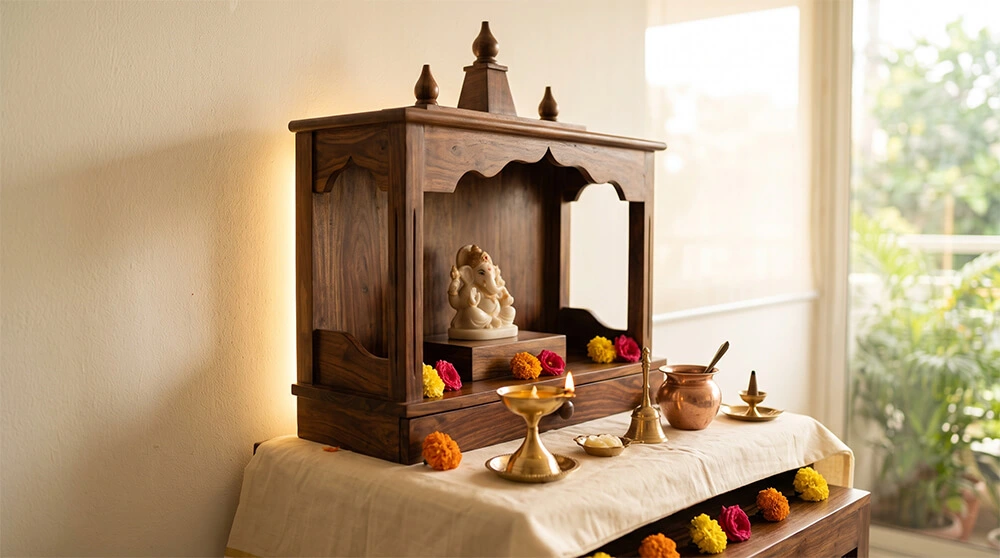
A home mandir is more than a place to keep idols. For many Indian families, it is a peaceful corner where the day begins with prayer, gratitude, and devotion.
Traditional Vastu Shastra offers various guidelines for choosing the location and arranging a home mandir, while daily pooja helps create a meaningful spiritual routine.
Whether you have a dedicated pooja room or a small mandir in an apartment, you can create a sacred space that feels clean, peaceful, and welcoming.
In this guide, discover simple home mandir Vastu tips, idol placement ideas, diya and dhoop practices, and an easy daily pooja routine.
Note: Vastu Shastra and the practices mentioned here are based on traditional beliefs and customs. Practices may vary between families, regions, and spiritual traditions.
1. Which Direction Is Best for a Home Mandir?
According to traditional Vastu Shastra, the Northeast (Ishan Kona) is generally considered an auspicious location for a home mandir. It is traditionally associated with spirituality, purity, and positive energy.
If the Northeast is not practical for your home, the East or North may also be considered suitable according to various Vastu traditions.
Which Direction Should You Face During Pooja?
Many traditional practices recommend facing East or North while praying.
However, your home’s layout, available space, and family tradition should also be considered. You do not need to change your entire home simply to follow one particular Vastu recommendation.
Places Commonly Avoided
Traditional Vastu guidance generally recommends avoiding placing the mandir:
- Directly underneath a staircase
- In or immediately beside a bathroom or toilet area
- In a cluttered storage space
- In a location where the sacred space is frequently disturbed
Most importantly, choose a location where the mandir can remain clean, peaceful, and respected.
2. How to Arrange Idols in Your Mandir
A well-arranged mandir does not need to be crowded with many idols or decorative items.
Keep the deities that are meaningful to your family’s daily worship and give each one an appropriate, respectful space.
Keep Idols at a Comfortable Height
Avoid keeping idols directly on the floor. Place them at a comfortable height where you can see them easily while sitting or standing for prayer.
The arrangement should also leave enough space for cleaning and performing your daily rituals.
Avoid Overcrowding
A simple altar can often feel more peaceful than one filled with too many objects.
Keep the main deity or Ishta Devata as the natural focal point and arrange other deities and pooja items neatly around it.
What About Broken Idols?
Many Hindu traditions recommend treating damaged or broken murtis with respect rather than disposing of them with ordinary household waste.
If an idol becomes damaged, follow the appropriate practice for the deity, material, and your family tradition. When unsure, you can consult a knowledgeable priest.
3. Choosing the Right Mandir Material and Lighting
Your home mandir should complement your space while maintaining a traditional and peaceful atmosphere.
Wooden Mandir
Wooden temples are popular because they bring warmth and a timeless traditional feel to the home. Sheesham, teak, and mango wood are among the commonly used choices.
Marble Mandir
White marble is traditionally associated with purity and is widely used for temples and prayer spaces.
Brass Pooja Accessories
Brass is a popular material for traditional pooja essentials such as diyas, bells, aarti plates, incense holders, and panchapatra.
Combining a wooden mandir with brass accessories can create an elegant and traditional appearance.
Choose Soft Lighting
Warm white lighting can help create a calm atmosphere around your mandir. Avoid excessively bright or harsh lighting.
The gentle glow of a traditional diya can also become a beautiful and meaningful part of the prayer space.
Always place a burning diya on a stable surface and keep it safely away from curtains, paper, fabric, and other flammable materials.
4. Diya, Dhoop and Incense in Daily Pooja
The diya has an important place in Hindu worship and is traditionally associated with light, devotion, and the removal of darkness.
Traditional Vastu practices often associate the Southeast (Agni Kona) with the fire element, and some households prefer placing the diya toward this side of the mandir.
For lighting a diya, families may use ghee, sesame oil, mustard oil, or other traditionally preferred oils, depending on their customs.
Dhoop and agarbatti are also commonly used during prayer. Their fragrance can help create a distinct devotional atmosphere.
However, incense should always be used in moderation with proper ventilation, particularly in smaller rooms.
5. A Simple 10-Minute Daily Pooja Routine
Daily worship does not always have to be elaborate. A few peaceful minutes of sincere prayer can become a meaningful part of your everyday routine.
Here is a simple approach:
1. Clean the Mandir
Start by keeping the mandir and surrounding area clean. Use a dedicated clean cloth and arrange the pooja items neatly.
2. Offer Water
Offer fresh water according to your family’s traditional practice.
3. Offer Flowers
Fresh flowers can be offered to the deity according to your tradition and the occasion.
4. Light the Diya
Light the diya and take a moment to pray. You can chant a simple mantra, prayer, or the Gayatri Mantra according to your practice.
5. Light Dhoop or Agarbatti
If incense is part of your worship, offer it respectfully while keeping the room properly ventilated.
6. Offer Naivedya
A simple offering can include fresh fruit, dry fruits, mishri, batasha, sweets, or another appropriate food.
After the prayer, the offering can be shared as prasad, according to your tradition.
7. Aarti and Prayer
Conclude your pooja with a short aarti or your preferred prayer. You may also ring the pooja bell if it is part of your practice.
8. Spend a Moment in Silence
Before leaving the mandir, sit quietly for a minute or two.
Use this moment for gratitude, meditation, or simply to begin your day with a peaceful mind.
6. How to Set Up a Mandir in a Small Apartment
You don’t need a large pooja room to create a meaningful sacred space.
For a smaller home, consider:
- A compact wall-mounted mandir
- A dedicated clean shelf
- A small wooden temple
- A pooja cabinet
- A quiet corner of a suitable room
The key is to keep the space clean, organized, and relatively undisturbed.
A small mandir maintained with devotion can be just as meaningful as a large dedicated prayer room.
7. Common Home Mandir Mistakes to Avoid
When setting up your sacred space, keep these simple points in mind:
Avoid clutter: Keep unrelated household items away from the mandir.
Don’t overcrowd the altar: A few thoughtfully arranged items can create a more peaceful space.
Maintain cleanliness: Clean the mandir regularly and remove old flowers and offerings appropriately.
Use fire safely: Never leave a burning diya or incense unattended.
Don’t follow Vastu rigidly: Traditional practices differ, and every home has a different layout. Practicality, safety, cleanliness, and your family’s traditions matter too.
Create a Peaceful Sacred Space at Home
A beautiful home mandir doesn’t have to be expensive, elaborate, or large.
What makes it special is the devotion and meaning you bring to it.
Whether you light a diya every morning, offer a flower, chant a mantra, or simply spend a few quiet moments in prayer, your mandir can become a peaceful part of your daily life.
Traditional Vastu principles can provide guidance for arranging the space, while your faith and family traditions give it its deeper meaning.
Bring Devotion Home with Pujalay
At Pujalay, we believe that spirituality belongs in everyday life.
From traditional pooja essentials, brass diyas, malas, rudraksha, spiritual accessories, and devotional products, Pujalay brings together thoughtfully selected products to support your everyday spiritual journey.
Create a sacred corner that feels peaceful, personal, and truly yours.
Pujalay — Faith, Devotion & the Timeless Beauty of Indian Spiritual Traditions.