
What Is Rudraksha? Meaning, Types, Mala & Bracelet Guide
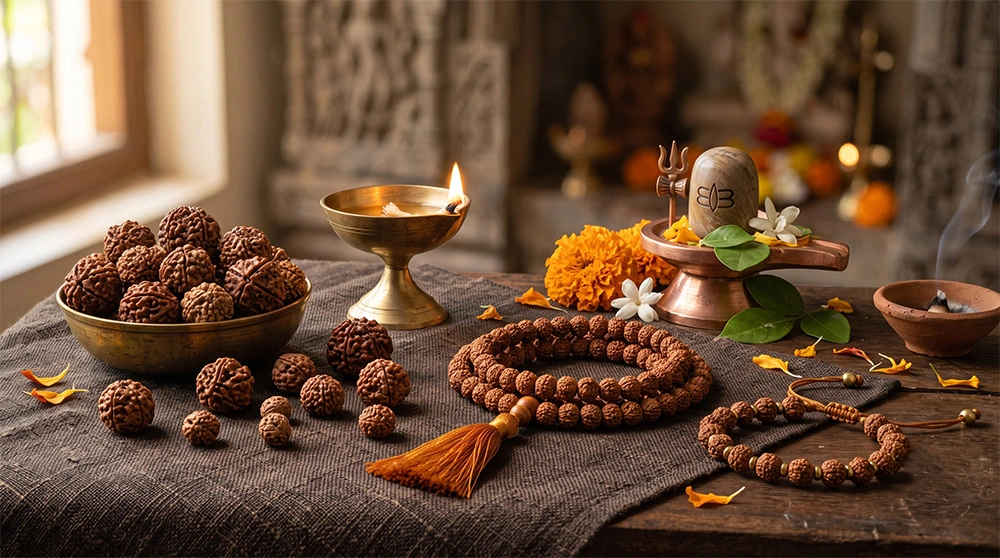
If you have explored Indian spiritual traditions, you have probably seen Rudraksha beads used in malas, bracelets and other devotional practices.
But what is Rudraksha, and why do devotees value these natural beads?
Rudraksha has a long-standing place in Hindu spiritual traditions and carries a traditional association with Lord Shiva. People use Rudraksha in prayer, meditation and japa. Many also wear it as a spiritual reminder in everyday life.
In this guide, we will explore the traditional meaning of Rudraksha, mukhi types, Rudraksha malas, bracelets and simple tips for choosing one.
What Is Rudraksha?
Rudraksha refers to the dried seeds of trees from the Elaeocarpus genus. These trees grow in parts of South and Southeast Asia, including regions of Nepal and India.
The word Rudraksha comes from Sanskrit and has a traditional connection with Lord Shiva.
For devotees, the bead represents spirituality, devotion and a connection with Shiva. Many people also include Rudraksha in meditation and mantra practices.
It is important to understand Rudraksha within its traditional and spiritual context rather than treating it as a guaranteed solution for health or personal problems.
What Does Rudraksha Mean Spiritually?
Traditional beliefs connect Rudraksha with Lord Shiva and spiritual practices such as meditation and japa.
Devotees often use the beads as a reminder to stay focused, peaceful and connected to their spiritual practice.
Different traditions also associate different mukhi Rudraksha beads with particular spiritual meanings.
What Does Mukhi Mean in Rudraksha?
The term mukhi refers to the natural lines or faces visible on a Rudraksha bead.
You may commonly hear names such as:
- 1 Mukhi Rudraksha
- 2 Mukhi Rudraksha
- 3 Mukhi Rudraksha
- 5 Mukhi Rudraksha
- 6 Mukhi Rudraksha
- 7 Mukhi Rudraksha
- 8 Mukhi Rudraksha
- 9 Mukhi Rudraksha
- 10 Mukhi Rudraksha
- 11 Mukhi Rudraksha
- 12 Mukhi Rudraksha
- 14 Mukhi Rudraksha
Each type has its own traditional associations.
The 5 Mukhi Rudraksha is especially common in everyday spiritual practices and is widely used in malas.
When choosing a specific mukhi, learn about its traditional significance and consider the source and product information carefully.
What Is a Rudraksha Mala?
A Rudraksha Mala is a string of Rudraksha beads traditionally used for japa, meditation and prayer.
Traditional japa malas often contain 108 beads along with a guru or sumeru bead.
During japa, devotees move through the beads while repeating a chosen mantra. This practice can create a steady rhythm and help keep attention on the prayer.
If your main goal is japa or mantra practice, a Rudraksha Mala may be a practical choice.
What Is a Rudraksha Bracelet?
A Rudraksha Bracelet contains Rudraksha beads arranged in a wearable form.
For everyday spiritual wear, a Rudraksha Bracelet may be more suitable.
Many people wear one as a personal reminder of their spiritual path, devotion and daily intention.
Before wearing any spiritual item, follow the practices and customs that are meaningful to your tradition.
What Are Nepali Rudraksha Beads?
Nepal is well known for Rudraksha cultivation, and Nepali Rudraksha beads are widely valued among devotees and spiritual practitioners.
Natural Rudraksha beads can vary in size, shape, colour and surface texture. These differences occur naturally.
If you are considering Nepali Rudraksha beads, pay attention to the available product information, bead characteristics and source before making a choice.
Rudraksha Mala or Bracelet: Which One Should You Choose?
Your intended use can help you decide.
A Rudraksha Mala may suit you if:
- You want to practise japa.
- You regularly recite mantras.
- You want a traditional meditation accessory.
- You prefer using beads during prayer.
A Rudraksha Bracelet may suit you if:
- You want something suitable for everyday wear.
- You prefer a smaller wearable format.
- You want a simple spiritual reminder throughout the day.
Those looking for a specific mukhi can first learn about its traditional significance before choosing one.
How to Choose Rudraksha
Understand Your Purpose
First, decide why you want Rudraksha.
Are you looking for a mala for japa, a bracelet for everyday spiritual wear or a specific mukhi associated with a traditional practice?
Your answer can make the selection easier.
Learn About the Bead
Look for clear information about the bead type, mukhi, size and origin.
A reliable source should provide useful details rather than make unrealistic promises.
Consider Your Tradition
Rudraksha practices can vary between families, teachers and spiritual traditions.
If you follow a particular tradition or guru, consider their guidance when choosing and wearing Rudraksha.
Choose Carefully
Natural spiritual products deserve careful attention.
Look for clear descriptions and transparent information. Avoid making a decision based only on claims of guaranteed results.
How to Care for Rudraksha
Rudraksha is a natural seed, so handle it with care.
Keep your beads clean and dry. Avoid exposing them unnecessarily to harsh chemicals, perfumes or prolonged moisture.
When you are not using a Rudraksha mala or bracelet, store it in a clean and dry place.
Gentle handling can help preserve the natural appearance of the beads.
Is Rudraksha a Medical Treatment?
Rudraksha has a traditional spiritual role, but it should not replace professional medical advice or treatment.
Many claims about Rudraksha benefits come from traditional beliefs rather than established medical evidence.
Use Rudraksha as part of your spiritual practice, and speak with a qualified healthcare professional about medical concerns.
Final Thoughts
Rudraksha has remained an important part of Indian spiritual traditions for generations.
Whether you choose a Rudraksha Mala for japa, a bracelet for everyday spiritual wear or a particular mukhi for its traditional association, take time to understand what you are choosing.
At Pujalay, we aim to create a trusted space where people can learn about Indian spiritual traditions, discover meaningful practices and, in time, find thoughtfully selected spiritual essentials.
Stay connected with Pujalay for more spiritual knowledge, traditional practices and useful guides.